About This Episode
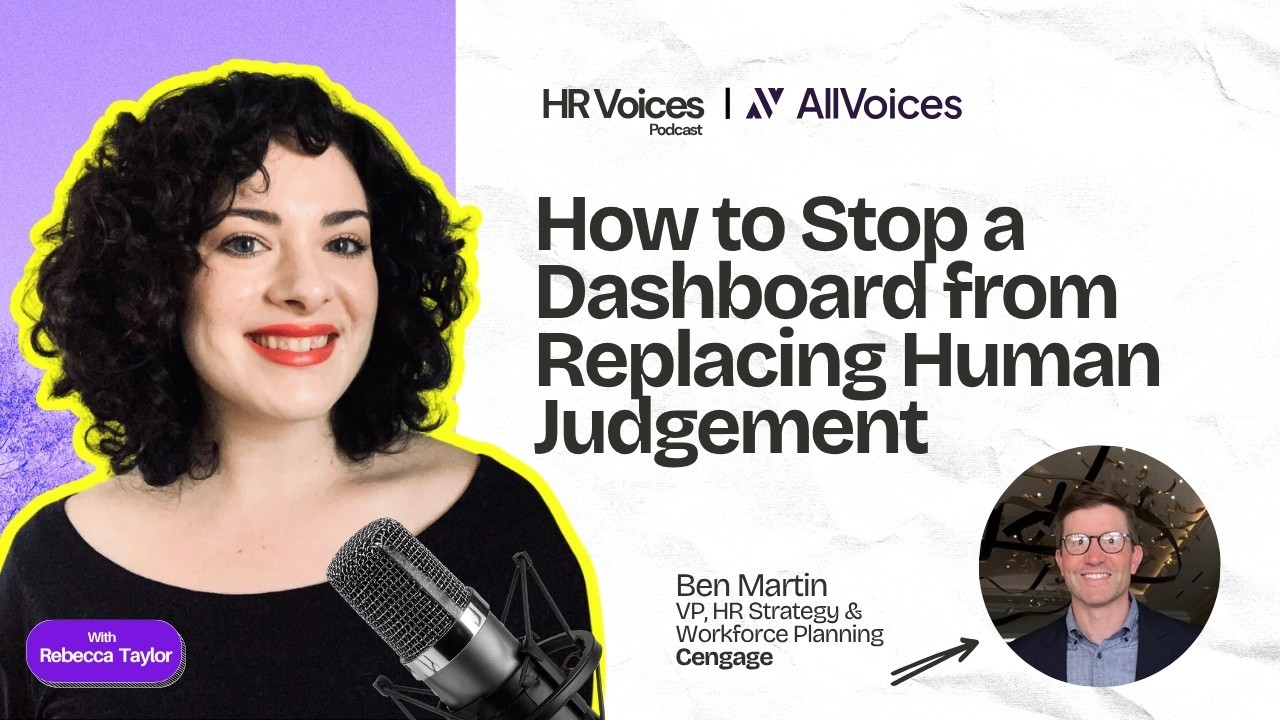
An ops lead spends a year building the case management infrastructure a VP now uses to justify cutting a manager training budget, but the dashboard misses the side-channel complaints that tell a different story. Ben Martin, VP of HR Strategy and Workforce Planning at Cengage, explains what to do when the data isn't wrong, just incomplete: why a VP quoting your dashboard is still a win, attaching a "so what" before data reaches leadership, where AI helps, and why not to correct a VP in the room.
About The Guest
Ben Martin is VP of HR Strategy and Workforce Planning at Cengage Group, the global edtech company, where he leads a team focused on turning workforce data into decisions leaders can actually act on. His career sits at the intersection of HR analytics and business strategy, and he takes a clear-eyed view of what dashboards are good for. No system captures everything, he argues, so HR has to be candid about its blind spots and leave human judgment to do the real work.
Episode Breakdown

An HR operations lead spends a year building the case management infrastructure his company now runs on. At a quarterly business review, a VP points at the employee relations dashboard and cuts the manager training budget, because the reported volume looks low. The data is accurate. The conclusion is wrong. Ben Martin, VP of HR Strategy and Workforce Planning at Cengage Group, worked through that scenario on HR Voices with host Rebecca Taylor.

Most of the complaints that would change the picture never entered the system. They arrived as Slack messages to managers and as hallway conversations that nobody logged. Ben’s read of the moment is not the one most people expect. He puts the failure with the analytics team rather than with the VP, and he places the fix weeks before anyone opened a dashboard in a meeting.

Why a Dashboard Can Be Accurate and Still Mislead

Ben starts somewhere unexpected: the VP is the best thing in that room. An executive who opens an HR dashboard and reasons from it is what a mature people analytics function exists to produce. Ben describes that alone as a win, and as a trust account worth protecting.

The gap opened earlier. A dashboard is a tool like any other, and the adoption work around it matters as much as the build. Switching something on and handing it over, with no account of how it works or what it excludes, is where this scenario actually begins.

What the VP cut makes the stakes concrete. Gallup puts managers at at least 70 percent of the variance in employee engagement scores across business units, which makes a budget for skills individual contributors were never taught a strange line to trim on thin evidence.

The deeper problem is what the dashboard never received. Roughly seven in ten people who experience harassment never raise it with a supervisor, manager, or union representative, according to the EEOC task force on workplace harassment. Formal intake counts the reports that arrive, which is why anonymous surveys and hotlines miss real company risk.

Ben sets the expectation for the tool itself deliberately low. He describes a dashboard as answering about 60 percent of the standing questions that would otherwise reach his team, the recurring asks about turnover, engagement, and time to fill. It speeds the work up. Judgment still has to close the gap.

How HR Builds a View of What the System Misses

There is no one-stop shop, and Ben does not pretend otherwise. Manual processes and side conversations persist in every company, sometimes because they are the only way to move something quickly around a system limit. The honest position is to tell leadership those channels exist and that HR is working to shrink them.

The human half of the answer is coordination. HR is fragmented across analytics, learning, compensation, and business partners, so Ben routes demand through a single contact the leader already trusts, usually the business partner assigned to that unit. Going around that person splits the story a leader hears.

The technical half is where Ben sees genuine value in AI. Pulling from email, Slack, surveys, and decks, then cross-referencing those sources and citing them, produces a fuller picture of employee experience than any single intake form. He treats that as the opportunity, and a recent AllVoices webinar covers where AI helps employee relations and where judgment still decides.

He draws the line at the handoff. Nothing that comes out of a model gets passed to a business leader unreviewed. SHRM research on people analytics found that 95 percent of HR professionals want to understand the rationale behind an algorithm’s decision, and Ben treats reviewing those outputs as a skill teams have to build.

What Actually Works

Write the Talking Points Before the Meeting Starts

Ben expects his team to know which meeting the dashboard will appear in and what the leader plans to say about it. The data travels with footnotes, insights, and a recommendation. Teams building a more data-driven HR function treat that pre-read as part of the deliverable.

Name the Blind Spots When the Dashboard Ships

A launch is an adoption problem, not a link in an email, and the models that make adoption stick apply to a dashboard as much as to a reorganization. Ben wants the limits stated at rollout, naming which channels feed the numbers, which do not, and what a low count can and cannot mean.

Keep the Correction Out of the Room

Contradicting a VP mid-review buys a small factual win at the cost of the relationship that made the dashboard matter. Ben takes it offline instead, owns the briefing failure on behalf of HR, and uses the follow-up to set the standard for the next review.

Where Employee Relations Fits

Employee relations data carries this problem in its sharpest form. Case volume in a function that owns complaints, investigations, and conflict resolution measures how many people trusted the process enough to use it, which is a different quantity from how much is happening. Read as incidence, a quiet quarter looks like a healthy one.

Teams that track case trends by manager, location, and issue type get closer to the second number, and the forwarded email or escalated Slack thread becomes a case rather than a hallway memory. The intake rate stays a signal in its own right.

Frequently Asked Questions About HR Dashboards

What Should HR Do When a Leader Misreads a Dashboard in a Meeting?

Take it offline. Ben recommends against correcting a VP in the room, because the factual win costs more than it returns. Follow up afterward, own the briefing gap, and commit to talking points before the next review.

Why Do Employee Relations Dashboards Undercount Complaints?

They count only what enters the formal channel. Concerns raised as Slack messages to managers, hallway conversations, or forwarded emails never reach intake, so the dashboard reports the reporting rate rather than the underlying volume.

How Often Should HR Brief Leaders on a Dashboard’s Limitations?

Every time the data supports a decision. Ben treats the rollout briefing as a start rather than a finish, and recommends a pre-read before any review where a leader plans to quote the numbers.

Can AI Close the Gap Between Formal Intake and Side Channels?

Partly. Ben sees real value in AI that pulls from email, Slack, surveys, and presentations, cross-references those sources, and cites them. He stops short of passing an unreviewed output to a business leader.

Who Owns the So What Behind an HR Dashboard?

The team that built the dashboard. Ben expects footnotes, insights, and a recommendation to travel with the data, coordinated with the HR business partner who holds the relationship with that leader.

The Bottom Line for HR Leaders

Ben Martin’s framing puts the relationship ahead of the correction. A leader who quotes your dashboard in a quarterly review is the rarest asset an analytics function has, and the price of embarrassing that person is every later meeting they hold without you. Ben’s advice is to make the landing soft, thank them for using the data, and fix the briefing. The dashboard was not the failure. The handoff was.

See how AllVoices helps employee relations teams capture the concerns that never reach a formal intake form, and book a demo of the platform.
Our next webinar
Frequently asked questions

Got more questions? Email us at support@allvoices.co and we'll respond ASAP.

No items found.
Frequently asked questions

Got more questions? Email us at support@allvoices.co and we'll respond ASAP.

No items found.

When HR Dashboards Miss the Story: Data, Blind Spots and Judgment

About the guest

Ben Martin is VP of HR Strategy and Workforce Planning at Cengage Group, the global edtech company, where he leads a team focused on turning workforce data into decisions leaders can actually act on. His career sits at the intersection of HR analytics and business strategy, and he takes a clear-eyed view of what dashboards are good for. No system captures everything, he argues, so HR has to be candid about its blind spots and leave human judgment to do the real work.

Episode Breakdown

An HR operations lead spends a year building the case management infrastructure his company now runs on. At a quarterly business review, a VP points at the employee relations dashboard and cuts the manager training budget, because the reported volume looks low. The data is accurate. The conclusion is wrong. Ben Martin, VP of HR Strategy and Workforce Planning at Cengage Group, worked through that scenario on HR Voices with host Rebecca Taylor.

Most of the complaints that would change the picture never entered the system. They arrived as Slack messages to managers and as hallway conversations that nobody logged. Ben’s read of the moment is not the one most people expect. He puts the failure with the analytics team rather than with the VP, and he places the fix weeks before anyone opened a dashboard in a meeting.

Why a Dashboard Can Be Accurate and Still Mislead

Ben starts somewhere unexpected: the VP is the best thing in that room. An executive who opens an HR dashboard and reasons from it is what a mature people analytics function exists to produce. Ben describes that alone as a win, and as a trust account worth protecting.

The gap opened earlier. A dashboard is a tool like any other, and the adoption work around it matters as much as the build. Switching something on and handing it over, with no account of how it works or what it excludes, is where this scenario actually begins.

What the VP cut makes the stakes concrete. Gallup puts managers at at least 70 percent of the variance in employee engagement scores across business units, which makes a budget for skills individual contributors were never taught a strange line to trim on thin evidence.

The deeper problem is what the dashboard never received. Roughly seven in ten people who experience harassment never raise it with a supervisor, manager, or union representative, according to the EEOC task force on workplace harassment. Formal intake counts the reports that arrive, which is why anonymous surveys and hotlines miss real company risk.

Ben sets the expectation for the tool itself deliberately low. He describes a dashboard as answering about 60 percent of the standing questions that would otherwise reach his team, the recurring asks about turnover, engagement, and time to fill. It speeds the work up. Judgment still has to close the gap.

How HR Builds a View of What the System Misses

There is no one-stop shop, and Ben does not pretend otherwise. Manual processes and side conversations persist in every company, sometimes because they are the only way to move something quickly around a system limit. The honest position is to tell leadership those channels exist and that HR is working to shrink them.

The human half of the answer is coordination. HR is fragmented across analytics, learning, compensation, and business partners, so Ben routes demand through a single contact the leader already trusts, usually the business partner assigned to that unit. Going around that person splits the story a leader hears.

The technical half is where Ben sees genuine value in AI. Pulling from email, Slack, surveys, and decks, then cross-referencing those sources and citing them, produces a fuller picture of employee experience than any single intake form. He treats that as the opportunity, and a recent AllVoices webinar covers where AI helps employee relations and where judgment still decides.

He draws the line at the handoff. Nothing that comes out of a model gets passed to a business leader unreviewed. SHRM research on people analytics found that 95 percent of HR professionals want to understand the rationale behind an algorithm’s decision, and Ben treats reviewing those outputs as a skill teams have to build.

What Actually Works

Write the Talking Points Before the Meeting Starts

Ben expects his team to know which meeting the dashboard will appear in and what the leader plans to say about it. The data travels with footnotes, insights, and a recommendation. Teams building a more data-driven HR function treat that pre-read as part of the deliverable.

Name the Blind Spots When the Dashboard Ships

A launch is an adoption problem, not a link in an email, and the models that make adoption stick apply to a dashboard as much as to a reorganization. Ben wants the limits stated at rollout, naming which channels feed the numbers, which do not, and what a low count can and cannot mean.

Keep the Correction Out of the Room

Contradicting a VP mid-review buys a small factual win at the cost of the relationship that made the dashboard matter. Ben takes it offline instead, owns the briefing failure on behalf of HR, and uses the follow-up to set the standard for the next review.

Where Employee Relations Fits

Employee relations data carries this problem in its sharpest form. Case volume in a function that owns complaints, investigations, and conflict resolution measures how many people trusted the process enough to use it, which is a different quantity from how much is happening. Read as incidence, a quiet quarter looks like a healthy one.

Teams that track case trends by manager, location, and issue type get closer to the second number, and the forwarded email or escalated Slack thread becomes a case rather than a hallway memory. The intake rate stays a signal in its own right.

Frequently Asked Questions About HR Dashboards

What Should HR Do When a Leader Misreads a Dashboard in a Meeting?

Take it offline. Ben recommends against correcting a VP in the room, because the factual win costs more than it returns. Follow up afterward, own the briefing gap, and commit to talking points before the next review.

Why Do Employee Relations Dashboards Undercount Complaints?

They count only what enters the formal channel. Concerns raised as Slack messages to managers, hallway conversations, or forwarded emails never reach intake, so the dashboard reports the reporting rate rather than the underlying volume.

How Often Should HR Brief Leaders on a Dashboard’s Limitations?

Every time the data supports a decision. Ben treats the rollout briefing as a start rather than a finish, and recommends a pre-read before any review where a leader plans to quote the numbers.

Can AI Close the Gap Between Formal Intake and Side Channels?

Partly. Ben sees real value in AI that pulls from email, Slack, surveys, and presentations, cross-references those sources, and cites them. He stops short of passing an unreviewed output to a business leader.

Who Owns the So What Behind an HR Dashboard?

The team that built the dashboard. Ben expects footnotes, insights, and a recommendation to travel with the data, coordinated with the HR business partner who holds the relationship with that leader.

The Bottom Line for HR Leaders

Ben Martin’s framing puts the relationship ahead of the correction. A leader who quotes your dashboard in a quarterly review is the rarest asset an analytics function has, and the price of embarrassing that person is every later meeting they hold without you. Ben’s advice is to make the landing soft, thank them for using the data, and fix the briefing. The dashboard was not the failure. The handoff was.

See how AllVoices helps employee relations teams capture the concerns that never reach a formal intake form, and book a demo of the platform.