About This Episode
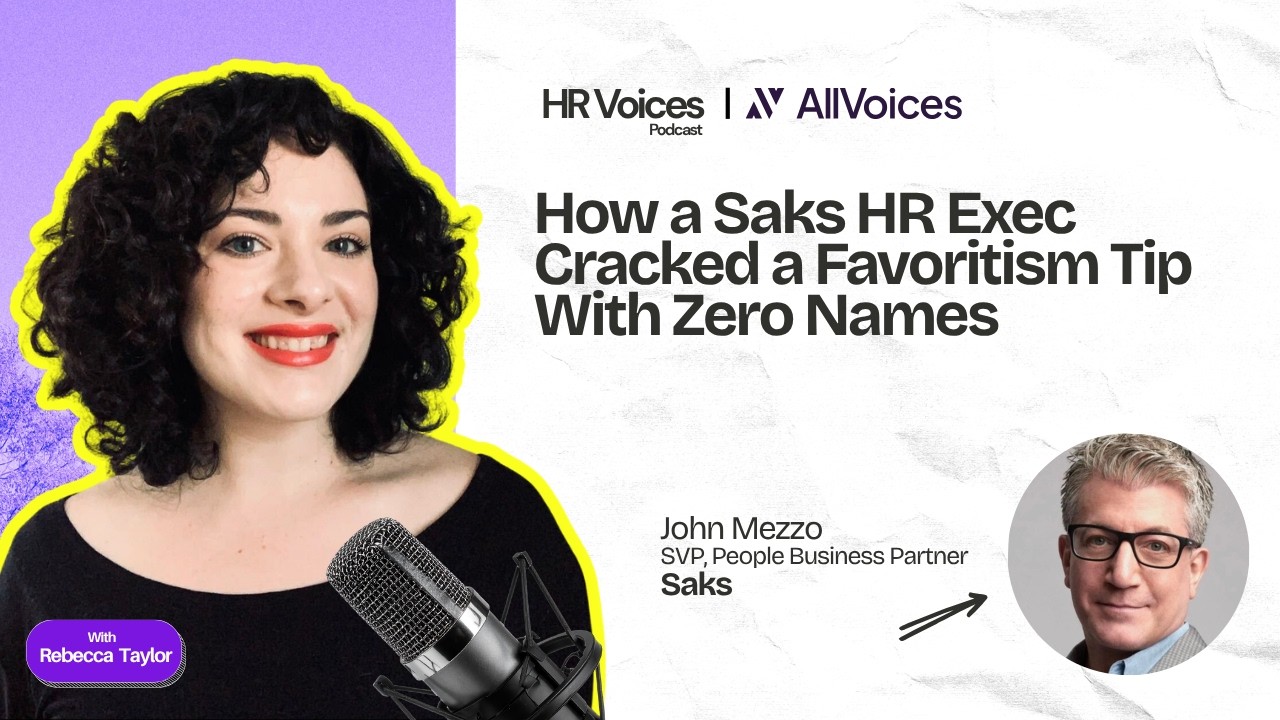
An anonymous ethics hotline report lands on your desk: widespread favoritism on the sales team, with no names, no dates and no incidents. The VP of sales wants it closed as unactionable, but the comp and promotion data lines up with the complaint almost perfectly. Rebecca Taylor hands the scenario to John Mezzo, a C-suite HR executive, with no prep and no warning — a working session on how to move on a claim with no complainant and no accused.
About The Guest
John Mezzo is a C-suite human resources executive and certified executive coach who has led people functions at multi-billion-dollar global retail and consumer brands. He served as Chief People Officer at Saks OFF 5th, and earlier held senior HR leadership roles at Vineyard Vines, Burberry, Michael Kors, Ralph Lauren and L Brands. His work centres on employee relations, organizational credibility and coaching leaders through the moments where the policy manual runs out and judgement has to take over.
Episode Breakdown

An anonymous report to the company’s ethics reporting hotline says a sales team runs on favoritism. It names no people, no dates, and no incidents, and the VP of sales wants it closed as unactionable. Then HR pulls compensation and promotion data, and the pattern lines up with the complaint almost perfectly. On HR Voices, host Rebecca Taylor handed that scenario to John Mezzo, a C-suite HR executive and former Chief People Officer at Saks OFF 5th, with no preparation.

John, who has run people functions for retail brands, refused both easy exits. He would not close the report, and he would not start a witch hunt. The work sits between those moves: read the tip as feedback, check the pay data against how each person got there, and hand the business a decision it owns.

Why a Tip With No Names Still Gets Worked

John takes the cost of an investigation seriously, since it pulls sellers away from revenue work. He still would not side with the VP. Someone felt there was something worth looking into, and that deserves respect.

His reasoning starts with managers, whose every action either keeps top talent engaged or wears it down. On a sales team, that talent touches the bottom line. If the report is smoke, John wants to know whether there is a fire.

The missing names made sense to him: people reporting favoritism tend to fear retaliation for speaking up. Rebecca noted that the reporter is usually not the top performer; John allowed for a strong seller watching someone else take a slice of a finite pie. Either way, holding the leader accountable is “the price you pay to have a team.”

What Favoritism Looks Like When Nobody Intends It

Favoritism is a gray word, John said, and it often rides on relationships that spilled over from work or started before the job. “Relationships build,” he said, when people spend 40-plus hours a week together. HR does not pry, but it has to know when one crosses a line.

Intent does not settle it. John borrowed a line from harassment training, “intentions are irrelevant,” and offered an example: a manager who does karaoke with one third of the team every other Thursday. Nobody may mean anything by it. Everyone left off the invitation still reads it as a signal.

John agreed with Rebecca that deliberate sabotage is rare. The pattern is usually one its owner never noticed.

Written rules do not stop it. In a 2011 Georgetown University survey of more than 300 senior U.S. executives, 94 percent said their companies had procedures against favoritism in promotions. Yet 56 percent said they often had a favorite in mind before the formal review began.

What Actually Works

Map Every Pay Journey Before Calling It a Pattern

John starts in what he called “detective mode”: who is paid most, who has advanced fastest, and whether each person’s place in the role’s pay range matches the appraisals, peer rankings, and scorecards on file. A known underperformer in the top one percent of the range is a red flag.

Then he traces each journey, because several explain a gap without any favoritism. New hires may earn more because the company found it was not competitive. A legacy brand’s employees may be paid differently because another leader, with another budget, set their pay before the businesses combined. John called AI-assisted people analytics a helpful tool for this work.

Demographic slices come next, by sex or age band, and there the complaint can change character. Federal law bars employers from basing pay, job assignment, or promotion decisions on race, sex, age 40 and over, and other protected characteristics.

Ask the VP to Walk Through the Team First

Before sharing a finding, John asks the VP to walk him through the organization: who reports to whom, and who knew whom before. HR is tied to the business, he said, but it is not in the business every day.

Then the data arrives as a question. John opens with “are you aware that” and adds the finding: the highest-paid sellers are all men, say, or all from one legacy brand. A CHRO he once worked for met every statistic with “so what.” The answer has to come from the business, and John wants leaders to “feel that sense of ownership.”

Make the Go-Forward the Fix

With nothing formal to substantiate, John measures success differently: “the true win in something like this is what happens on the go forward.” The fixes are small. Rebecca suggested moving a floor meeting held at 11:00 when some sellers start at noon, and checking who keeps landing the best time slots.

John added a reminder in the leader’s morning meetings of an open door for concerns. Leaders already study the business financially; this lets them “study it from a people fairness and equity standpoint.”

He builds a coaching culture wherever he works and wants the manager to see a learning moment, not an inconvenience. Coaching has limits, though. When a review turns up an inappropriate relationship or bad scheduling choices, “you have to call it out and manage it and say this is not okay.”

Where Employee Relations Fits

Rebecca described HR’s role here as interpreter: favoritism is the reporter’s diagnosis, the best word available for being paid or treated differently. John’s framing was plainer. The report is feedback, and feedback from employees arrives in many shapes, from an annual engagement survey to one every other week.

Nobody can ask this reporter what favoritism means to them. Channels with two-way anonymous follow-up close that gap, letting HR ask for specifics without asking for a name.

John also named the line HR walks. Leaders must trust it with early plans, and the workforce must never see it as there only for leaders. His answer is presence on the store floor and in the distribution center. We took up the same trust gap in a webinar on frontline employee relations.

Frequently Asked Questions About Investigating Favoritism Complaints

Can HR Investigate an Anonymous Favoritism Complaint That Names No One?

Yes, by starting with data instead of people. Pull pay, promotion, and performance records for the team, test whether the pattern holds, and talk with the accountable leader before widening the circle.

What Data Should HR Review When a Favoritism Report Has No Details?

Pay position within the range, promotion history, and performance ratings, sliced by demographics. John also checks hire dates and legacy business units, since market fixes and mergers can explain gaps that look like favoritism.

How Should HR Approach a VP Who Wants the Complaint Closed?

Ask about the team before presenting findings. John has the VP walk through the org, then opens with “are you aware that,” so the leader helps design the fix instead of defending against it.

Can a Manager Show Favoritism Without Meaning To?

Yes, and John treats that as the common case. A standing karaoke night with a third of the team looks innocent to the manager and like a closed circle to everyone else.

When Does Favoritism at Work Become a Legal Problem?

Usually when the pattern tracks race, sex, age 40 and over, or another protected characteristic. Preference along those lines in pay, shifts, or promotions is illegal under federal law, which turns a fairness complaint into a workplace discrimination question.

The Bottom Line for HR Leaders

John Mezzo’s framing reaches past this scenario: a vague favoritism report is feedback in imperfect language, and the win is what happens on the go-forward. HR brings the data and a recommendation. The business makes the call.

That is why the first HR myth he named was “HR said.” He does not let a leader tell someone who missed a promotion that HR blocked it. The decision was the business’s all along, and so is the fix.

See how AllVoices helps HR teams follow up on anonymous reports and turn a data pattern into a fix leaders own.
Our next webinar
Frequently asked questions

Got more questions? Email us at support@allvoices.co and we'll respond ASAP.

No items found.
Frequently asked questions

Got more questions? Email us at support@allvoices.co and we'll respond ASAP.

No items found.

How to Investigate a Favoritism Complaint With No Names

About the guest

John Mezzo is a C-suite human resources executive and certified executive coach who has led people functions at multi-billion-dollar global retail and consumer brands. He served as Chief People Officer at Saks OFF 5th, and earlier held senior HR leadership roles at Vineyard Vines, Burberry, Michael Kors, Ralph Lauren and L Brands. His work centres on employee relations, organizational credibility and coaching leaders through the moments where the policy manual runs out and judgement has to take over.

Episode Breakdown

An anonymous report to the company’s ethics reporting hotline says a sales team runs on favoritism. It names no people, no dates, and no incidents, and the VP of sales wants it closed as unactionable. Then HR pulls compensation and promotion data, and the pattern lines up with the complaint almost perfectly. On HR Voices, host Rebecca Taylor handed that scenario to John Mezzo, a C-suite HR executive and former Chief People Officer at Saks OFF 5th, with no preparation.

John, who has run people functions for retail brands, refused both easy exits. He would not close the report, and he would not start a witch hunt. The work sits between those moves: read the tip as feedback, check the pay data against how each person got there, and hand the business a decision it owns.

Why a Tip With No Names Still Gets Worked

John takes the cost of an investigation seriously, since it pulls sellers away from revenue work. He still would not side with the VP. Someone felt there was something worth looking into, and that deserves respect.

His reasoning starts with managers, whose every action either keeps top talent engaged or wears it down. On a sales team, that talent touches the bottom line. If the report is smoke, John wants to know whether there is a fire.

The missing names made sense to him: people reporting favoritism tend to fear retaliation for speaking up. Rebecca noted that the reporter is usually not the top performer; John allowed for a strong seller watching someone else take a slice of a finite pie. Either way, holding the leader accountable is “the price you pay to have a team.”

What Favoritism Looks Like When Nobody Intends It

Favoritism is a gray word, John said, and it often rides on relationships that spilled over from work or started before the job. “Relationships build,” he said, when people spend 40-plus hours a week together. HR does not pry, but it has to know when one crosses a line.

Intent does not settle it. John borrowed a line from harassment training, “intentions are irrelevant,” and offered an example: a manager who does karaoke with one third of the team every other Thursday. Nobody may mean anything by it. Everyone left off the invitation still reads it as a signal.

John agreed with Rebecca that deliberate sabotage is rare. The pattern is usually one its owner never noticed.

Written rules do not stop it. In a 2011 Georgetown University survey of more than 300 senior U.S. executives, 94 percent said their companies had procedures against favoritism in promotions. Yet 56 percent said they often had a favorite in mind before the formal review began.

What Actually Works

Map Every Pay Journey Before Calling It a Pattern

John starts in what he called “detective mode”: who is paid most, who has advanced fastest, and whether each person’s place in the role’s pay range matches the appraisals, peer rankings, and scorecards on file. A known underperformer in the top one percent of the range is a red flag.

Then he traces each journey, because several explain a gap without any favoritism. New hires may earn more because the company found it was not competitive. A legacy brand’s employees may be paid differently because another leader, with another budget, set their pay before the businesses combined. John called AI-assisted people analytics a helpful tool for this work.

Demographic slices come next, by sex or age band, and there the complaint can change character. Federal law bars employers from basing pay, job assignment, or promotion decisions on race, sex, age 40 and over, and other protected characteristics.

Ask the VP to Walk Through the Team First

Before sharing a finding, John asks the VP to walk him through the organization: who reports to whom, and who knew whom before. HR is tied to the business, he said, but it is not in the business every day.

Then the data arrives as a question. John opens with “are you aware that” and adds the finding: the highest-paid sellers are all men, say, or all from one legacy brand. A CHRO he once worked for met every statistic with “so what.” The answer has to come from the business, and John wants leaders to “feel that sense of ownership.”

Make the Go-Forward the Fix

With nothing formal to substantiate, John measures success differently: “the true win in something like this is what happens on the go forward.” The fixes are small. Rebecca suggested moving a floor meeting held at 11:00 when some sellers start at noon, and checking who keeps landing the best time slots.

John added a reminder in the leader’s morning meetings of an open door for concerns. Leaders already study the business financially; this lets them “study it from a people fairness and equity standpoint.”

He builds a coaching culture wherever he works and wants the manager to see a learning moment, not an inconvenience. Coaching has limits, though. When a review turns up an inappropriate relationship or bad scheduling choices, “you have to call it out and manage it and say this is not okay.”

Where Employee Relations Fits

Rebecca described HR’s role here as interpreter: favoritism is the reporter’s diagnosis, the best word available for being paid or treated differently. John’s framing was plainer. The report is feedback, and feedback from employees arrives in many shapes, from an annual engagement survey to one every other week.

Nobody can ask this reporter what favoritism means to them. Channels with two-way anonymous follow-up close that gap, letting HR ask for specifics without asking for a name.

John also named the line HR walks. Leaders must trust it with early plans, and the workforce must never see it as there only for leaders. His answer is presence on the store floor and in the distribution center. We took up the same trust gap in a webinar on frontline employee relations.

Frequently Asked Questions About Investigating Favoritism Complaints

Can HR Investigate an Anonymous Favoritism Complaint That Names No One?

Yes, by starting with data instead of people. Pull pay, promotion, and performance records for the team, test whether the pattern holds, and talk with the accountable leader before widening the circle.

What Data Should HR Review When a Favoritism Report Has No Details?

Pay position within the range, promotion history, and performance ratings, sliced by demographics. John also checks hire dates and legacy business units, since market fixes and mergers can explain gaps that look like favoritism.

How Should HR Approach a VP Who Wants the Complaint Closed?

Ask about the team before presenting findings. John has the VP walk through the org, then opens with “are you aware that,” so the leader helps design the fix instead of defending against it.

Can a Manager Show Favoritism Without Meaning To?

Yes, and John treats that as the common case. A standing karaoke night with a third of the team looks innocent to the manager and like a closed circle to everyone else.

When Does Favoritism at Work Become a Legal Problem?

Usually when the pattern tracks race, sex, age 40 and over, or another protected characteristic. Preference along those lines in pay, shifts, or promotions is illegal under federal law, which turns a fairness complaint into a workplace discrimination question.

The Bottom Line for HR Leaders

John Mezzo’s framing reaches past this scenario: a vague favoritism report is feedback in imperfect language, and the win is what happens on the go-forward. HR brings the data and a recommendation. The business makes the call.

That is why the first HR myth he named was “HR said.” He does not let a leader tell someone who missed a promotion that HR blocked it. The decision was the business’s all along, and so is the fix.

See how AllVoices helps HR teams follow up on anonymous reports and turn a data pattern into a fix leaders own.