About This Episode
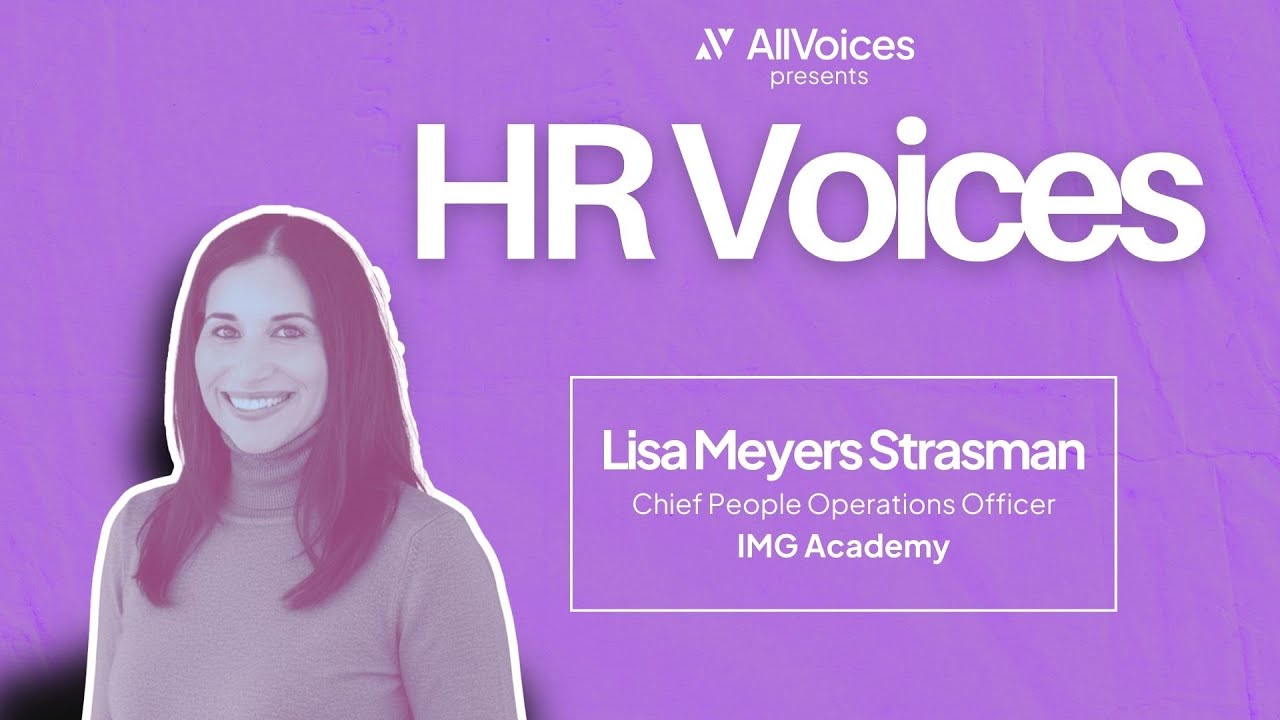
When half your workforce is on a Florida campus and half is fully remote, how do you sustain one culture, prevent burnout and support growth? Lisa Strasman, Chief People Operations Officer at IMG Academy and former President of NCSA, describes how the sports education brand aligns people, performance and purpose. She outlines the organization's unusual mix of boarding school, elite training, year-round camps and mental performance services, and how athlete DNA fuels — and occasionally overheats — a high-performing team.
About The Guest
Lisa Meyers Strasman is Chief People Operations Officer at IMG Academy and previously President of NCSA, which the academy acquired. She leads people strategy for an organization split between a residential Florida campus and a fully remote workforce, where the two halves experience the same culture completely differently. She treats careers as dynamic rather than laddered, and is candid that a workforce selected for athlete DNA carries a specific and predictable burnout risk.
Episode Breakdown

IMG Academy runs on two different kinds of workday. About half of its more than 2,200 people work on a boarding school and training campus in Bradenton, Florida. The other half are fully remote, spread across the country. Lisa Meyers Strasman, Chief People Operations Officer at IMG Academy, is responsible for making that one culture instead of two.

Rebecca Taylor sat down with Lisa on HR Voices to talk about how that works. Lisa did not come up through HR. She started at NCSA, the college recruiting business, more than twenty years ago, ran it for a long stretch, and stayed on after IMG Academy acquired it. Her move into people operations came as the two organizations brought their brands, products, and people together. Her view of the job is plain: help the business perform better through its people.

Why One Culture Is Harder When Half the Team Is Remote

Lisa described the split as a set of shared challenges with real differences underneath. The campus team works in person, in a physical setting built around student athletes. The remote half meets the same organization through screens, with the gaps remote work opens for HR that come with it.

That pace is the other half of the problem. Lisa pointed out that the way people work together, even when everyone is on site, has shifted massively in the last five-plus years. With half the team fully remote, communication channels, engagement opportunities, and cultural touch points all have to stay relevant in that environment. She called it top of mind.

The concern is well documented. Gallup’s research on the advantages and challenges of hybrid work lists feeling less connected to the organization’s culture among the greatest challenges of hybrid work. The shared norms that make up a culture do not survive distance on their own. Someone has to build the bridges.

What the Engagement Survey Told IMG Academy

IMG Academy runs engagement surveys regularly throughout the year, and Lisa was direct about who set the agenda: the team told leadership what to focus on. Burnout and work-life balance sat high on the list, especially for remote team members. Growth and development came next, specifically confidence that people can keep growing and meet career goals inside the organization. Communication rounded it out.

Burnout is not a niche complaint. A 2018 Gallup study of full-time workers found that about two-thirds experience burnout on the job, and it listed lack of communication and support from a manager among the five factors most highly correlated with it.

What IMG Academy did with the results is the instructive part. The 2026 organizational goals were built with intention, both in what they said and in how they were delivered to staff. The number one goal across the organization is called “Ignite Our Heartbeat.” It is about the internal team, so that staff feel their best when they serve student athletes, parents, and families. Putting a people goal first was a deliberate choice.

What Actually Works

Tie Every Program Back to What Employees Said

Lisa believes in listening to people and then acting on what they say in a highly intentional way. Her team connects the dots for staff, linking each 2026 program back to what employees said in the survey.

Rebecca called out why that step matters. HR teams often read a survey and go straight into planning mode. The part that gets lost is telling employees why. Rebecca’s rule of thumb was that if something feels said a thousand times, people are probably hearing it for the first time. Lisa agreed and said it is an area IMG Academy keeps working to improve. A survey earns trust only when the follow-up is visible, which is the job of feedback that connects to action.

Treat Careers as Dynamic Instead of Fixed

Team members want to grow, and Lisa said IMG Academy wants to support that. The days of a career ladder mapped out years ahead are gone, in her view, because “the world’s just moving too fast.” The work is supporting people in that dynamic environment while also managing burnout and energy levels.

Rebecca described a career as something living and breathing, planned six months out, maybe a year. Lisa added that learning to live in the gray space, and getting comfortable enough with it, can be a growth opportunity in itself. HR does not have to have every answer. It has to be honest that the organization is figuring things out alongside its people.

Build on the Athlete DNA Already on Staff

IMG Academy puts its students through goal-setting courses. Lisa noted that the same skills are equally important for staff, and that the organization has to remind itself of that. The overlap is not accidental. Most of the staff were high school athletes, many played in college, and some played professionally.

Lisa views that as a hiring advantage: people who are goal oriented, competitive, and know how to work well on teams. Rebecca, who started in high-volume sales recruiting, recalled employers asking for an athletic background before a degree, for resilience and coachability. The lesson runs both ways. The skills IMG Academy teaches students are the ones its own staff need to keep practicing, and a team used to adapting as plans change still needs the reminder.

Where Employee Relations Fits

Lisa defined the goal of people operations in business terms: a stronger, tighter, higher-performing organization, which means happier customers, more engaged team members, and the long-term financial health of the business. Lisa now sits across the online and campus sides, two similar but distinct cultures brought together through acquisition. That split makes the full picture harder to see from one desk.

The signals that matter most, such as burnout among remote staff, communication gaps, and doubts about growth, often surface first as concerns rather than survey scores. Leaders who act on burnout early need those concerns logged in one place, where a pattern shows up before it becomes attrition. Building a culture of feedback and trust gives both halves of a hybrid workforce the same way to be heard.

Frequently Asked Questions About Hybrid Culture at IMG Academy

How Many Employees Does IMG Academy Have and Where Do They Work?

More than 2,200. Lisa Meyers Strasman said about half work on the campus in Bradenton, Florida, and the other half are fully remote across the country, which means one people team serves two different workdays.

What Is Ignite Our Heartbeat at IMG Academy?

It is IMG Academy’s number one organizational goal for 2026. The goal centers on the internal team, so that staff feel their best when they serve student athletes and their families. Lisa’s team ties its programs back to engagement survey results.

What Did IMG Academy’s Engagement Survey Show?

Burnout and work-life balance ranked high, especially for remote team members. Growth and development, including confidence in career progress inside the organization, came next, and communication was a consistent theme. Those results shaped the 2026 priorities.

How Does Lisa Meyers Strasman Think About Career Paths?

As dynamic, not fixed. Lisa said set-in-stone, multi-year career paths are gone because the world moves too fast. Her focus is helping people grow with confidence while also managing burnout and energy levels.

Why Does IMG Academy Hire So Many Former Athletes?

Lisa sees it as an advantage. Most staff were high school athletes, and many played in college or professionally. She values people who are goal oriented, competitive, and work well on teams, and the academy develops staff with the same goal-setting skills it teaches students.

The Bottom Line for HR Leaders

Lisa Meyers Strasman’s framing was simple: people want to be part of “a mission that matters.” At IMG Academy, that mission is helping kids “win their future through sports,” and staff connect to it easily. Most companies have to work harder at it.

Her advice was to connect the daily work to that higher purpose, and then keep reminding people and showcasing the success stories. Purpose smooths over the bumps that work inevitably brings. Rebecca’s takeaway was that those connection points never hold on their own; they have to be connected and reinforced constantly.

See how AllVoices supports People leaders who listen to a campus team and a remote team as one workforce, then show both what changed.

Our next webinar
Frequently asked questions

Got more questions? Email us at support@allvoices.co and we'll respond ASAP.

No items found.
Frequently asked questions

Got more questions? Email us at support@allvoices.co and we'll respond ASAP.

No items found.

Lisa Meyers Strasman, Chief People Operations Officer at IMG Academy

About the guest

Lisa Meyers Strasman is Chief People Operations Officer at IMG Academy and previously President of NCSA, which the academy acquired. She leads people strategy for an organization split between a residential Florida campus and a fully remote workforce, where the two halves experience the same culture completely differently. She treats careers as dynamic rather than laddered, and is candid that a workforce selected for athlete DNA carries a specific and predictable burnout risk.

Episode Breakdown

IMG Academy runs on two different kinds of workday. About half of its more than 2,200 people work on a boarding school and training campus in Bradenton, Florida. The other half are fully remote, spread across the country. Lisa Meyers Strasman, Chief People Operations Officer at IMG Academy, is responsible for making that one culture instead of two.

Rebecca Taylor sat down with Lisa on HR Voices to talk about how that works. Lisa did not come up through HR. She started at NCSA, the college recruiting business, more than twenty years ago, ran it for a long stretch, and stayed on after IMG Academy acquired it. Her move into people operations came as the two organizations brought their brands, products, and people together. Her view of the job is plain: help the business perform better through its people.

Why One Culture Is Harder When Half the Team Is Remote

Lisa described the split as a set of shared challenges with real differences underneath. The campus team works in person, in a physical setting built around student athletes. The remote half meets the same organization through screens, with the gaps remote work opens for HR that come with it.

That pace is the other half of the problem. Lisa pointed out that the way people work together, even when everyone is on site, has shifted massively in the last five-plus years. With half the team fully remote, communication channels, engagement opportunities, and cultural touch points all have to stay relevant in that environment. She called it top of mind.

The concern is well documented. Gallup’s research on the advantages and challenges of hybrid work lists feeling less connected to the organization’s culture among the greatest challenges of hybrid work. The shared norms that make up a culture do not survive distance on their own. Someone has to build the bridges.

What the Engagement Survey Told IMG Academy

IMG Academy runs engagement surveys regularly throughout the year, and Lisa was direct about who set the agenda: the team told leadership what to focus on. Burnout and work-life balance sat high on the list, especially for remote team members. Growth and development came next, specifically confidence that people can keep growing and meet career goals inside the organization. Communication rounded it out.

Burnout is not a niche complaint. A 2018 Gallup study of full-time workers found that about two-thirds experience burnout on the job, and it listed lack of communication and support from a manager among the five factors most highly correlated with it.

What IMG Academy did with the results is the instructive part. The 2026 organizational goals were built with intention, both in what they said and in how they were delivered to staff. The number one goal across the organization is called “Ignite Our Heartbeat.” It is about the internal team, so that staff feel their best when they serve student athletes, parents, and families. Putting a people goal first was a deliberate choice.

What Actually Works

Tie Every Program Back to What Employees Said

Lisa believes in listening to people and then acting on what they say in a highly intentional way. Her team connects the dots for staff, linking each 2026 program back to what employees said in the survey.

Rebecca called out why that step matters. HR teams often read a survey and go straight into planning mode. The part that gets lost is telling employees why. Rebecca’s rule of thumb was that if something feels said a thousand times, people are probably hearing it for the first time. Lisa agreed and said it is an area IMG Academy keeps working to improve. A survey earns trust only when the follow-up is visible, which is the job of feedback that connects to action.

Treat Careers as Dynamic Instead of Fixed

Team members want to grow, and Lisa said IMG Academy wants to support that. The days of a career ladder mapped out years ahead are gone, in her view, because “the world’s just moving too fast.” The work is supporting people in that dynamic environment while also managing burnout and energy levels.

Rebecca described a career as something living and breathing, planned six months out, maybe a year. Lisa added that learning to live in the gray space, and getting comfortable enough with it, can be a growth opportunity in itself. HR does not have to have every answer. It has to be honest that the organization is figuring things out alongside its people.

Build on the Athlete DNA Already on Staff

IMG Academy puts its students through goal-setting courses. Lisa noted that the same skills are equally important for staff, and that the organization has to remind itself of that. The overlap is not accidental. Most of the staff were high school athletes, many played in college, and some played professionally.

Lisa views that as a hiring advantage: people who are goal oriented, competitive, and know how to work well on teams. Rebecca, who started in high-volume sales recruiting, recalled employers asking for an athletic background before a degree, for resilience and coachability. The lesson runs both ways. The skills IMG Academy teaches students are the ones its own staff need to keep practicing, and a team used to adapting as plans change still needs the reminder.

Where Employee Relations Fits

Lisa defined the goal of people operations in business terms: a stronger, tighter, higher-performing organization, which means happier customers, more engaged team members, and the long-term financial health of the business. Lisa now sits across the online and campus sides, two similar but distinct cultures brought together through acquisition. That split makes the full picture harder to see from one desk.

The signals that matter most, such as burnout among remote staff, communication gaps, and doubts about growth, often surface first as concerns rather than survey scores. Leaders who act on burnout early need those concerns logged in one place, where a pattern shows up before it becomes attrition. Building a culture of feedback and trust gives both halves of a hybrid workforce the same way to be heard.

Frequently Asked Questions About Hybrid Culture at IMG Academy

How Many Employees Does IMG Academy Have and Where Do They Work?

More than 2,200. Lisa Meyers Strasman said about half work on the campus in Bradenton, Florida, and the other half are fully remote across the country, which means one people team serves two different workdays.

What Is Ignite Our Heartbeat at IMG Academy?

It is IMG Academy’s number one organizational goal for 2026. The goal centers on the internal team, so that staff feel their best when they serve student athletes and their families. Lisa’s team ties its programs back to engagement survey results.

What Did IMG Academy’s Engagement Survey Show?

Burnout and work-life balance ranked high, especially for remote team members. Growth and development, including confidence in career progress inside the organization, came next, and communication was a consistent theme. Those results shaped the 2026 priorities.

How Does Lisa Meyers Strasman Think About Career Paths?

As dynamic, not fixed. Lisa said set-in-stone, multi-year career paths are gone because the world moves too fast. Her focus is helping people grow with confidence while also managing burnout and energy levels.

Why Does IMG Academy Hire So Many Former Athletes?

Lisa sees it as an advantage. Most staff were high school athletes, and many played in college or professionally. She values people who are goal oriented, competitive, and work well on teams, and the academy develops staff with the same goal-setting skills it teaches students.

The Bottom Line for HR Leaders

Lisa Meyers Strasman’s framing was simple: people want to be part of “a mission that matters.” At IMG Academy, that mission is helping kids “win their future through sports,” and staff connect to it easily. Most companies have to work harder at it.

Her advice was to connect the daily work to that higher purpose, and then keep reminding people and showcasing the success stories. Purpose smooths over the bumps that work inevitably brings. Rebecca’s takeaway was that those connection points never hold on their own; they have to be connected and reinforced constantly.

See how AllVoices supports People leaders who listen to a campus team and a remote team as one workforce, then show both what changed.