About This Episode
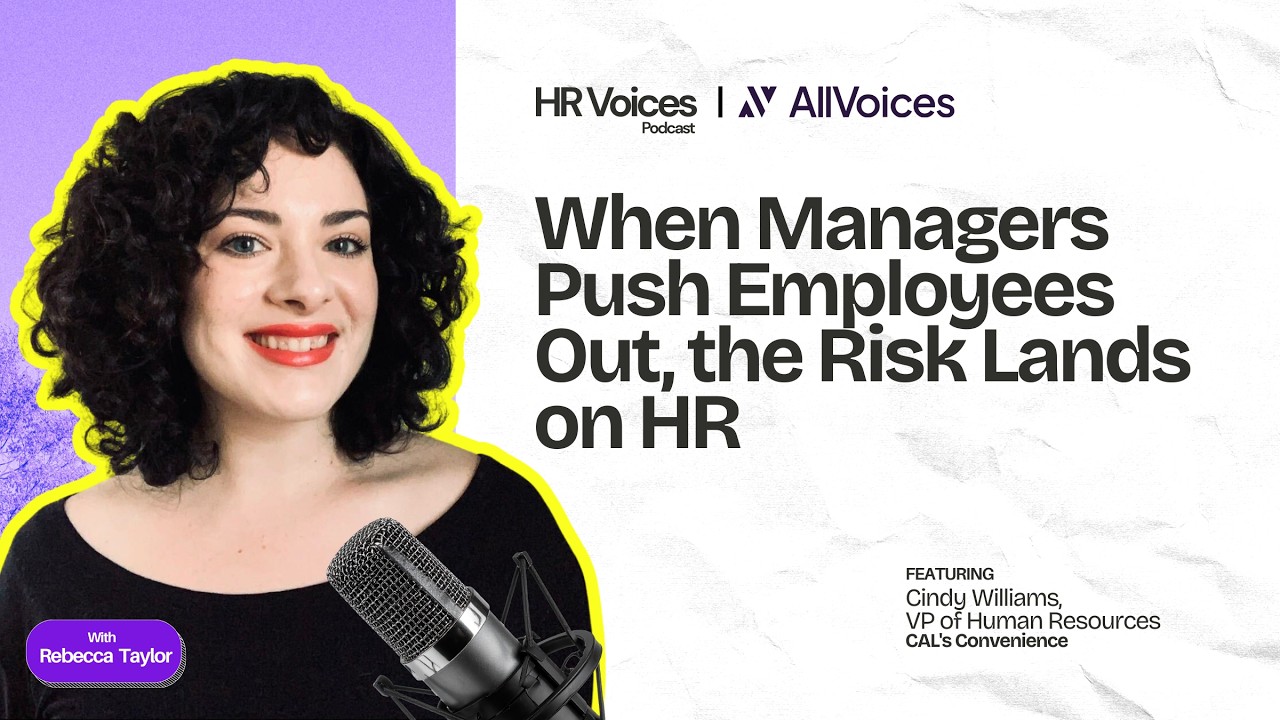
A high performer goes quiet. Her manager decides she is quiet quitting and starts handing her worse assignments to push her toward the door — not knowing she is caring for a parent with a terminal diagnosis and staying silent out of fear of being seen as a liability. Rebecca Taylor works the scenario with Cindy Williams, VP of Human Resources at CAL's Convenience, who runs HR for 2,500 employees across 210 frontline locations. Her read: the real risk is the manager who tried to engineer an exit.
About The Guest
Cindy Williams is Vice President of Human Resources at CAL's Convenience, where she leads the people function for roughly 2,500 employees across 210 frontline convenience and fuel locations. She works at the high-volume end of employee relations, where accommodation requests, manager accountability and documentation decisions arrive daily and rarely arrive tidy. She is direct about what the HR function gets right, and equally direct about the parts of its own reputation it has earned.
Episode Breakdown

A high performer stops answering on Slack, sits silent in meetings, and has not taken a sick day in three years. Her manager decides she is quiet quitting and starts handing her worse assignments to see whether she will leave. Nobody at work knows she is caring for a parent with a terminal diagnosis. Host Rebecca Taylor read the case to Cindy Williams, VP of Human Resources at CAL’s Convenience, on HR Voices.

Cindy runs HR for 2,500 employees across 210 frontline convenience and gas locations, and she turned the scenario around in her first answer. What bothered her was a manager who tried to engineer an exit instead of asking one question. That kind of quiet push toward the door leaves the legal risk with HR.

Why the Manager Is the Bigger Risk

In Cindy’s view, the manager only had to call the employee in, say “I see a difference in your performance,” and ask what was going on and how to help. She gives a proven employee credit for the pattern she has built. A break in that pattern means something is going on.

Worse assignments are the wrong response. Handed out to hurry a resignation, they start to resemble the intolerable conditions behind a constructive discharge claim.

The quiet quitting label made the shortcut feel reasonable. Gallup’s research found in 2022 that quiet quitters made up at least half of the US workforce, yet its advice to managers points the other way: one meaningful conversation per week with each team member.

Cindy concluded that “we can manage our way through the employee issue.” The manager’s version of events, already shared with other leaders, is the harder problem.

What an Honest Confidentiality Promise Sounds Like

The scenario asked HR to correct the manager without confirming anything about the employee’s private life. Cindy doubts a problem can be addressed without addressing it, so she lets people tell HR what they are comfortable telling.

Her confidentiality promise works the same way. When employees ask HR to keep something to itself, Cindy tells them she will do her best, that it is “not an absolute yes,” and that anything she is obligated to act on will go further. Then the employee decides what to share.

An absolute promise becomes a trap the first time HR is bound to act on a disclosure, and Cindy argues that “HR does have to establish itself as a trustworthy entity.” The same restraint applies when a manager suspects an undiagnosed condition, where HR keeps the conversation on the work.

What Actually Works

Ask the Employee Before Briefing the Manager

Cindy weighed both sequences. Going to the employee first risks a manager who feels undermined for being skipped. She goes to the employee anyway.

Her opening is plain. She has received some feedback, and “I am concerned about you and I want to help.” The employee shares what she is comfortable sharing, and Cindy asks whether she can pass it, or some of it, to the manager.

Only then does she meet the manager, saying openly that she talked to the employee first. She explains that the employee is not quietly quitting and asks how the manager wants to proceed.

That handoff raises the stakes. Once a manager knows about a relative’s disability, the EEOC says an employer must avoid treating the employee differently because of her association with a person with a disability.

Make the Manager Explain the Shortcut

Cindy extends the manager the same benefit of the doubt she gives the employee. Then she asks the manager to “walk me through why your knee-jerk reaction was to try and accelerate her departure.” If pushing someone out was the first instinct, she calls that “a pretty deep character flaw.”

The story already told to other leaders is the manager’s to repair. The manager goes back to them, owns it, and says it should not have happened. Cindy’s phrase is to “put your hands on the error.”

Write Down the Conversation and the Exception

Cindy treats documentation as protection, not bureaucracy. When a manager wants a chronically late employee gone without having documented a single conversation, she starts the record that day. An undocumented conversation, “in the eyes of the law,” does not exist.

Managers roll their eyes. Cindy tells them she would do the same exact thing if their own boss wanted them gone, then books a check-in thirty days or two weeks out. An improving employee goes in the parking lot; one who is not moves to step two.

Exceptions get the same care. A benefits manager in chemotherapy worked from home, and did again when her illness returned. An employee recovering from a knee replacement asked for the same and was told to take FMLA leave instead. Cindy brings calls like these to the CEO and flags when a choice “may not be the policy thing to do” but is the right one.

Where Employee Relations Fits

Cindy’s answer to hearing about problems early is access. The first thing she does in a new role is email every employee her cell number, and employees use it judiciously. She calls the result “a network of low-level intelligence.”

Those calls surface problems before they blow up, because most people, in her experience, are decent and fair-minded. Early warning matters most for complaints that could reach the EEOC, which can turn into litigation when handled badly.

She runs HR as a service, and she knows of no business model where “a customer is supposed to chase the service provider,” an idea that runs through how HR shows up for frontline employees. It is also the core of employee relations work that catches a manager’s shortcut before it becomes a claim.

Logged in one structured HR case system, each of those calls becomes part of a record rather than a memory.

Frequently Asked Questions About Managers Who Push Employees Out

Is It Illegal for a Manager to Give Worse Assignments to Push Someone Out?

It can be. Deliberately worsening someone’s work to force a resignation can support a constructive discharge claim, and the exposure grows once the manager knows the employee is caring for a relative with a disability.

Should HR Talk to the Employee or the Manager First?

Cindy starts with the employee. She asks what the employee is comfortable sharing and whether any of it can go to the manager, then is transparent with the manager about that order.

Can HR Promise to Keep What an Employee Shares Confidential?

Not absolutely. Cindy promises to do her best and warns up front that she must escalate anything she is bound to act on. The employee then decides what to share, knowing the limits before speaking.

Can an Employee Take FMLA Leave to Care for a Seriously Ill Parent?

Often, yes. Eligible employees can take up to twelve workweeks of job-protected leave in a twelve-month period to care for a parent with a serious health condition. The ADA’s duty of reasonable accommodation, by contrast, applies only to employees with disabilities.

How Should a Manager Undo a Performance Story Shared With Other Leaders?

By going back to the same people. Cindy has the manager return to each leader, own the error, and admit it was a mistake. HR does not clean it up, because the lesson has to land on the manager.

The Bottom Line for HR Leaders

Cindy Williams framed the whole scenario with one line: “yes, we have policies, but we work for people.” Someday everyone has an illness or a family crisis that shows up in their work, and the people they report to decide whether the company bends or cuts and runs.

She asks HR to look at itself first. The function plays the victim too often, in her view, and a support role is “not a four-letter word.” Done well, it is “the best thing that could ever happen to that company,” and a manager trying to engineer an exit is where HR proves it.

See how AllVoices helps HR teams hear about a manager’s shortcut early and keep every decision that follows on the record.
Our next webinar
Frequently asked questions

Got more questions? Email us at support@allvoices.co and we'll respond ASAP.

No items found.
Frequently asked questions

Got more questions? Email us at support@allvoices.co and we'll respond ASAP.

No items found.

When a Manager Engineers an Exit, the Risk Lands on HR

About the guest

Cindy Williams is Vice President of Human Resources at CAL's Convenience, where she leads the people function for roughly 2,500 employees across 210 frontline convenience and fuel locations. She works at the high-volume end of employee relations, where accommodation requests, manager accountability and documentation decisions arrive daily and rarely arrive tidy. She is direct about what the HR function gets right, and equally direct about the parts of its own reputation it has earned.

Episode Breakdown

A high performer stops answering on Slack, sits silent in meetings, and has not taken a sick day in three years. Her manager decides she is quiet quitting and starts handing her worse assignments to see whether she will leave. Nobody at work knows she is caring for a parent with a terminal diagnosis. Host Rebecca Taylor read the case to Cindy Williams, VP of Human Resources at CAL’s Convenience, on HR Voices.

Cindy runs HR for 2,500 employees across 210 frontline convenience and gas locations, and she turned the scenario around in her first answer. What bothered her was a manager who tried to engineer an exit instead of asking one question. That kind of quiet push toward the door leaves the legal risk with HR.

Why the Manager Is the Bigger Risk

In Cindy’s view, the manager only had to call the employee in, say “I see a difference in your performance,” and ask what was going on and how to help. She gives a proven employee credit for the pattern she has built. A break in that pattern means something is going on.

Worse assignments are the wrong response. Handed out to hurry a resignation, they start to resemble the intolerable conditions behind a constructive discharge claim.

The quiet quitting label made the shortcut feel reasonable. Gallup’s research found in 2022 that quiet quitters made up at least half of the US workforce, yet its advice to managers points the other way: one meaningful conversation per week with each team member.

Cindy concluded that “we can manage our way through the employee issue.” The manager’s version of events, already shared with other leaders, is the harder problem.

What an Honest Confidentiality Promise Sounds Like

The scenario asked HR to correct the manager without confirming anything about the employee’s private life. Cindy doubts a problem can be addressed without addressing it, so she lets people tell HR what they are comfortable telling.

Her confidentiality promise works the same way. When employees ask HR to keep something to itself, Cindy tells them she will do her best, that it is “not an absolute yes,” and that anything she is obligated to act on will go further. Then the employee decides what to share.

An absolute promise becomes a trap the first time HR is bound to act on a disclosure, and Cindy argues that “HR does have to establish itself as a trustworthy entity.” The same restraint applies when a manager suspects an undiagnosed condition, where HR keeps the conversation on the work.

What Actually Works

Ask the Employee Before Briefing the Manager

Cindy weighed both sequences. Going to the employee first risks a manager who feels undermined for being skipped. She goes to the employee anyway.

Her opening is plain. She has received some feedback, and “I am concerned about you and I want to help.” The employee shares what she is comfortable sharing, and Cindy asks whether she can pass it, or some of it, to the manager.

Only then does she meet the manager, saying openly that she talked to the employee first. She explains that the employee is not quietly quitting and asks how the manager wants to proceed.

That handoff raises the stakes. Once a manager knows about a relative’s disability, the EEOC says an employer must avoid treating the employee differently because of her association with a person with a disability.

Make the Manager Explain the Shortcut

Cindy extends the manager the same benefit of the doubt she gives the employee. Then she asks the manager to “walk me through why your knee-jerk reaction was to try and accelerate her departure.” If pushing someone out was the first instinct, she calls that “a pretty deep character flaw.”

The story already told to other leaders is the manager’s to repair. The manager goes back to them, owns it, and says it should not have happened. Cindy’s phrase is to “put your hands on the error.”

Write Down the Conversation and the Exception

Cindy treats documentation as protection, not bureaucracy. When a manager wants a chronically late employee gone without having documented a single conversation, she starts the record that day. An undocumented conversation, “in the eyes of the law,” does not exist.

Managers roll their eyes. Cindy tells them she would do the same exact thing if their own boss wanted them gone, then books a check-in thirty days or two weeks out. An improving employee goes in the parking lot; one who is not moves to step two.

Exceptions get the same care. A benefits manager in chemotherapy worked from home, and did again when her illness returned. An employee recovering from a knee replacement asked for the same and was told to take FMLA leave instead. Cindy brings calls like these to the CEO and flags when a choice “may not be the policy thing to do” but is the right one.

Where Employee Relations Fits

Cindy’s answer to hearing about problems early is access. The first thing she does in a new role is email every employee her cell number, and employees use it judiciously. She calls the result “a network of low-level intelligence.”

Those calls surface problems before they blow up, because most people, in her experience, are decent and fair-minded. Early warning matters most for complaints that could reach the EEOC, which can turn into litigation when handled badly.

She runs HR as a service, and she knows of no business model where “a customer is supposed to chase the service provider,” an idea that runs through how HR shows up for frontline employees. It is also the core of employee relations work that catches a manager’s shortcut before it becomes a claim.

Logged in one structured HR case system, each of those calls becomes part of a record rather than a memory.

Frequently Asked Questions About Managers Who Push Employees Out

Is It Illegal for a Manager to Give Worse Assignments to Push Someone Out?

It can be. Deliberately worsening someone’s work to force a resignation can support a constructive discharge claim, and the exposure grows once the manager knows the employee is caring for a relative with a disability.

Should HR Talk to the Employee or the Manager First?

Cindy starts with the employee. She asks what the employee is comfortable sharing and whether any of it can go to the manager, then is transparent with the manager about that order.

Can HR Promise to Keep What an Employee Shares Confidential?

Not absolutely. Cindy promises to do her best and warns up front that she must escalate anything she is bound to act on. The employee then decides what to share, knowing the limits before speaking.

Can an Employee Take FMLA Leave to Care for a Seriously Ill Parent?

Often, yes. Eligible employees can take up to twelve workweeks of job-protected leave in a twelve-month period to care for a parent with a serious health condition. The ADA’s duty of reasonable accommodation, by contrast, applies only to employees with disabilities.

How Should a Manager Undo a Performance Story Shared With Other Leaders?

By going back to the same people. Cindy has the manager return to each leader, own the error, and admit it was a mistake. HR does not clean it up, because the lesson has to land on the manager.

The Bottom Line for HR Leaders

Cindy Williams framed the whole scenario with one line: “yes, we have policies, but we work for people.” Someday everyone has an illness or a family crisis that shows up in their work, and the people they report to decide whether the company bends or cuts and runs.

She asks HR to look at itself first. The function plays the victim too often, in her view, and a support role is “not a four-letter word.” Done well, it is “the best thing that could ever happen to that company,” and a manager trying to engineer an exit is where HR proves it.

See how AllVoices helps HR teams hear about a manager’s shortcut early and keep every decision that follows on the record.