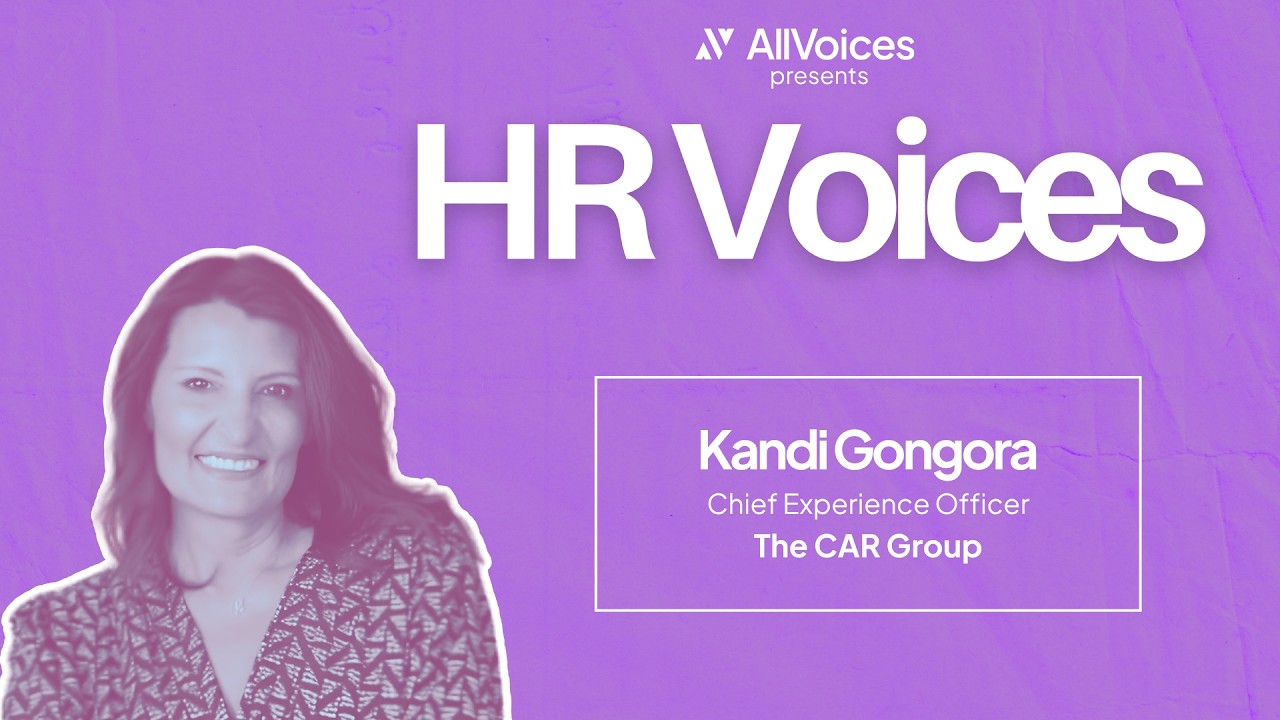
About This Episode
Managers are required to put 10% of every team in the bottom tier each year. One refuses, and certifies in writing that her whole team exceeds expectations. Then discrimination complaints reveal the bottom tiers skew by race. Rebecca Taylor works it through with Kandi Gongora, Chief Transformation and People Officer at The Car Group, who argues the bottom 10% is a leadership failure rather than an employee verdict — and that the “insubordinate” manager is the company's best early warning system.
About The Guest
Kandi Gongora is Chief Transformation and People Officer at The Car Group, a dual remit that puts her across both organizational change and the people systems that have to absorb it. She works on performance architecture — the ranking systems, calibration sessions and manager incentives that decide who is labelled a low performer — and argues that when a distribution curve produces disparate outcomes, the honest place to look is at the leaders who filled it in, not the employees who landed at the bottom of it.
Episode Breakdown

A company’s forced ranking system requires managers to place 10 percent of every team in the lowest tier each year, whatever the team delivered. One manager refuses and certifies in writing that all of her direct reports exceed expectations. Then employees ranked into the bottom tier by other managers file discrimination complaints, HR’s own review finds the outcomes skew by race, and leadership wants to defend the system. Kandi Gongora, Chief Transformation and People Officer at The Car Group, chose this scenario for HR Voices.

She knew it the moment she saw it: “This is it. This is the one.” The manager who broke the rule may be the best evidence the company has, and a bottom tier says more about the leaders above it than about the people ranked into it.

Why Leaders Still Reach for Forced Ranking

Leaders have proposed forced ranking to Kandi before. Her answer is no, backed by research. The usual aim is to find low performers and move them out. Kandi has watched the PIP get used the same way, “as a way to work somebody out.” Underneath, she often finds managers without “the courage or the skills” for the conversations that turn performance around.

Some companies, peers have told her, use the curve to avoid giving raises. Others default to habit. GE and Microsoft both ranked this way, Kandi said, and dropped it long ago. Harvard Business Review reported in 2016 that traditional appraisals had been abandoned by more than a third of U.S. companies.

Her sharper point is about fault. Someone hired the people in the bottom tier, onboarded them, developed them, and set their expectations, so the failure “goes all the way back up to leadership and then the managers.” The bottom tier is not a finding about employees. It is a finding about leadership.

Why the Manager Who Refused Is Evidence

On paper, her written refusal fits the definition of insubordination. Kandi would still start with her, curious about what the certification rests on. “Show me the proof,” she said: the metrics, the conversations with each employee, and how the manager develops them.

Rebecca noted that a signature like that can be self-serving. Kandi granted the point, then offered the other reading: integrity. People sometimes stand up for the right reasons, she said. “The system may be wrong.”

That makes the manager a data point. “I think she took courage to stand up,” Kandi said, and other managers may share her doubts and simply comply. Ordering her to fill the bottom tier “further fuels the complaints and puts us at greater risk.” Kandi reads the refusal as the manager keeping the company out of risk, not creating it.

Forced curves tax the people who comply, too. They wear down psychological safety on a team, so people stop collaborating, avoid mistakes, and keep the truth to themselves. The most entrepreneurial leave. Kandi calls the legal exposure foundational. The bigger risks are hidden ones, in innovation, culture, and turnover.

What Actually Works

Ask Leadership What the Ranking Is Supposed to Fix

Before meeting leadership, Kandi would spot-check how the other managers calibrate. Then she would walk in holding the research back, because leading with it puts leaders on the defense. Her first question is what the business is trying to achieve: performance, growth, cutting staff, or the compensation budget.

She asks which metrics leaders want to move, whether they are open to a different approach with the same or better outcome, and how long she has to prove it. Only then does the finding go on the table: the complaints were researched, the pattern is real, and the company has to address it.

Build Ratings on Behaviors, Metrics, and Growth

Exceeds, meets, and below are vague labels, in Kandi’s view, and vague labels let bias and favoritism in. When two employees hit the same goals and only one lands at the bottom, HR has to look at who keeps landing there. Title VII makes a practice that causes a disparate impact on the basis of race unlawful when the employer fails to show it is job related and consistent with business necessity.

Kandi’s own system rated three things. “We had behaviors instead of core values,” she said, alongside standard performance metrics and growth at the pace the organization needed. Clear definitions also protect the blunt, creative, fast-moving people who hit their goals and create friction, the ones a curve tends to bury. “Healthy debate is a great thing,” she said.

The rating is half the fix. Kandi wants feedback that is pulse-like and in the flow of work, based on improving performance and “not putting people in a box.” That is the case for continuous feedback between reviews, instead of a verdict once a year.

Run the Replacement as a Pilot With Leadership

Someone built the current system and owns it, so Kandi does not arrive with a finished replacement. She works out loud, brings decision points such as where to calibrate, and agrees on a timeline with leaders.

Then she asks for a pilot: one business unit, forced ranking on hold, and HR “shoulder to shoulder as a business partner.” A pilot also tells employees the company heard them and is changing in good faith.

Where Employee Relations Fits

Rebecca called the insubordination a side quest. The main plot is that employees spoke up and put a disparate impact pattern in front of leadership that nobody inside the process had flagged. That makes it as much an employee relations problem as a legal one.

People need room to speak up, Rebecca said, whether to a manager, in a formal complaint, or through an anonymous reporting channel. Both agreed the change has to be communicated back so those employees see it worked. Here, HR protects the company by protecting its people.

Frequently Asked Questions About Forced Ranking and Disparate Impact

Can Forced Ranking Create a Disparate Impact Claim?

Yes, when the bottom tier falls harder on one race, sex, or other group that Title VII protects. Employees can challenge the practice, and the employer must then show it is job related and consistent with business necessity.

Should HR Discipline a Manager Who Refuses to Force-Rank Her Team?

Not before learning why she refused. Kandi would ask for the proof behind the ratings first. If the team’s performance holds up, forcing compliance adds to the complaints and to the company’s risk.

Why Do Companies Still Use Forced Ranking?

Usually to find low performers and move them out. Kandi often traces it to managers who lack the courage or skills for hard conversations, to avoiding raises, or to a default that GE and Microsoft gave up long ago.

How Should HR Raise Disparate Impact Findings With Leadership?

Start with the business problem, then the data. Kandi asks what leaders want to achieve and whether they would accept a different approach with the same or better outcome. The findings come after, as a risk to address.

What Can Replace a Forced Ranking System?

Clear definitions and frequent feedback. Kandi’s system rated behaviors, standard metrics, and growth at the pace the organization needs, and she would test the change in one business unit first.

The Bottom Line for HR Leaders

Kandi Gongora’s framing starts with the assumption she wants gone: that HR people are not business people. HR helps build the system people work in, she argued, and thinks about the business constantly. It sometimes skips the business language, and the assumption survives.

“I want a business to win,” she said, and her route there runs through employees, then customers. A manager’s refusal and a set of complaints gave this company an early warning, and a chance to fix the system before the risk grew.

See how AllVoices helps People teams hear concerns like these early and act on them with a record that holds up.
Our next webinar
Frequently asked questions

Got more questions? Email us at support@allvoices.co and we'll respond ASAP.

No items found.
Frequently asked questions

Got more questions? Email us at support@allvoices.co and we'll respond ASAP.

No items found.

When a Manager Refuses to Rank Her Team in the Bottom 10%

About the guest

Kandi Gongora is Chief Transformation and People Officer at The Car Group, a dual remit that puts her across both organizational change and the people systems that have to absorb it. She works on performance architecture — the ranking systems, calibration sessions and manager incentives that decide who is labelled a low performer — and argues that when a distribution curve produces disparate outcomes, the honest place to look is at the leaders who filled it in, not the employees who landed at the bottom of it.

Episode Breakdown

A company’s forced ranking system requires managers to place 10 percent of every team in the lowest tier each year, whatever the team delivered. One manager refuses and certifies in writing that all of her direct reports exceed expectations. Then employees ranked into the bottom tier by other managers file discrimination complaints, HR’s own review finds the outcomes skew by race, and leadership wants to defend the system. Kandi Gongora, Chief Transformation and People Officer at The Car Group, chose this scenario for HR Voices.

She knew it the moment she saw it: “This is it. This is the one.” The manager who broke the rule may be the best evidence the company has, and a bottom tier says more about the leaders above it than about the people ranked into it.

Why Leaders Still Reach for Forced Ranking

Leaders have proposed forced ranking to Kandi before. Her answer is no, backed by research. The usual aim is to find low performers and move them out. Kandi has watched the PIP get used the same way, “as a way to work somebody out.” Underneath, she often finds managers without “the courage or the skills” for the conversations that turn performance around.

Some companies, peers have told her, use the curve to avoid giving raises. Others default to habit. GE and Microsoft both ranked this way, Kandi said, and dropped it long ago. Harvard Business Review reported in 2016 that traditional appraisals had been abandoned by more than a third of U.S. companies.

Her sharper point is about fault. Someone hired the people in the bottom tier, onboarded them, developed them, and set their expectations, so the failure “goes all the way back up to leadership and then the managers.” The bottom tier is not a finding about employees. It is a finding about leadership.

Why the Manager Who Refused Is Evidence

On paper, her written refusal fits the definition of insubordination. Kandi would still start with her, curious about what the certification rests on. “Show me the proof,” she said: the metrics, the conversations with each employee, and how the manager develops them.

Rebecca noted that a signature like that can be self-serving. Kandi granted the point, then offered the other reading: integrity. People sometimes stand up for the right reasons, she said. “The system may be wrong.”

That makes the manager a data point. “I think she took courage to stand up,” Kandi said, and other managers may share her doubts and simply comply. Ordering her to fill the bottom tier “further fuels the complaints and puts us at greater risk.” Kandi reads the refusal as the manager keeping the company out of risk, not creating it.

Forced curves tax the people who comply, too. They wear down psychological safety on a team, so people stop collaborating, avoid mistakes, and keep the truth to themselves. The most entrepreneurial leave. Kandi calls the legal exposure foundational. The bigger risks are hidden ones, in innovation, culture, and turnover.

What Actually Works

Ask Leadership What the Ranking Is Supposed to Fix

Before meeting leadership, Kandi would spot-check how the other managers calibrate. Then she would walk in holding the research back, because leading with it puts leaders on the defense. Her first question is what the business is trying to achieve: performance, growth, cutting staff, or the compensation budget.

She asks which metrics leaders want to move, whether they are open to a different approach with the same or better outcome, and how long she has to prove it. Only then does the finding go on the table: the complaints were researched, the pattern is real, and the company has to address it.

Build Ratings on Behaviors, Metrics, and Growth

Exceeds, meets, and below are vague labels, in Kandi’s view, and vague labels let bias and favoritism in. When two employees hit the same goals and only one lands at the bottom, HR has to look at who keeps landing there. Title VII makes a practice that causes a disparate impact on the basis of race unlawful when the employer fails to show it is job related and consistent with business necessity.

Kandi’s own system rated three things. “We had behaviors instead of core values,” she said, alongside standard performance metrics and growth at the pace the organization needed. Clear definitions also protect the blunt, creative, fast-moving people who hit their goals and create friction, the ones a curve tends to bury. “Healthy debate is a great thing,” she said.

The rating is half the fix. Kandi wants feedback that is pulse-like and in the flow of work, based on improving performance and “not putting people in a box.” That is the case for continuous feedback between reviews, instead of a verdict once a year.

Run the Replacement as a Pilot With Leadership

Someone built the current system and owns it, so Kandi does not arrive with a finished replacement. She works out loud, brings decision points such as where to calibrate, and agrees on a timeline with leaders.

Then she asks for a pilot: one business unit, forced ranking on hold, and HR “shoulder to shoulder as a business partner.” A pilot also tells employees the company heard them and is changing in good faith.

Where Employee Relations Fits

Rebecca called the insubordination a side quest. The main plot is that employees spoke up and put a disparate impact pattern in front of leadership that nobody inside the process had flagged. That makes it as much an employee relations problem as a legal one.

People need room to speak up, Rebecca said, whether to a manager, in a formal complaint, or through an anonymous reporting channel. Both agreed the change has to be communicated back so those employees see it worked. Here, HR protects the company by protecting its people.

Frequently Asked Questions About Forced Ranking and Disparate Impact

Can Forced Ranking Create a Disparate Impact Claim?

Yes, when the bottom tier falls harder on one race, sex, or other group that Title VII protects. Employees can challenge the practice, and the employer must then show it is job related and consistent with business necessity.

Should HR Discipline a Manager Who Refuses to Force-Rank Her Team?

Not before learning why she refused. Kandi would ask for the proof behind the ratings first. If the team’s performance holds up, forcing compliance adds to the complaints and to the company’s risk.

Why Do Companies Still Use Forced Ranking?

Usually to find low performers and move them out. Kandi often traces it to managers who lack the courage or skills for hard conversations, to avoiding raises, or to a default that GE and Microsoft gave up long ago.

How Should HR Raise Disparate Impact Findings With Leadership?

Start with the business problem, then the data. Kandi asks what leaders want to achieve and whether they would accept a different approach with the same or better outcome. The findings come after, as a risk to address.

What Can Replace a Forced Ranking System?

Clear definitions and frequent feedback. Kandi’s system rated behaviors, standard metrics, and growth at the pace the organization needs, and she would test the change in one business unit first.

The Bottom Line for HR Leaders

Kandi Gongora’s framing starts with the assumption she wants gone: that HR people are not business people. HR helps build the system people work in, she argued, and thinks about the business constantly. It sometimes skips the business language, and the assumption survives.

“I want a business to win,” she said, and her route there runs through employees, then customers. A manager’s refusal and a set of complaints gave this company an early warning, and a chance to fix the system before the risk grew.

See how AllVoices helps People teams hear concerns like these early and act on them with a record that holds up.