About This Episode
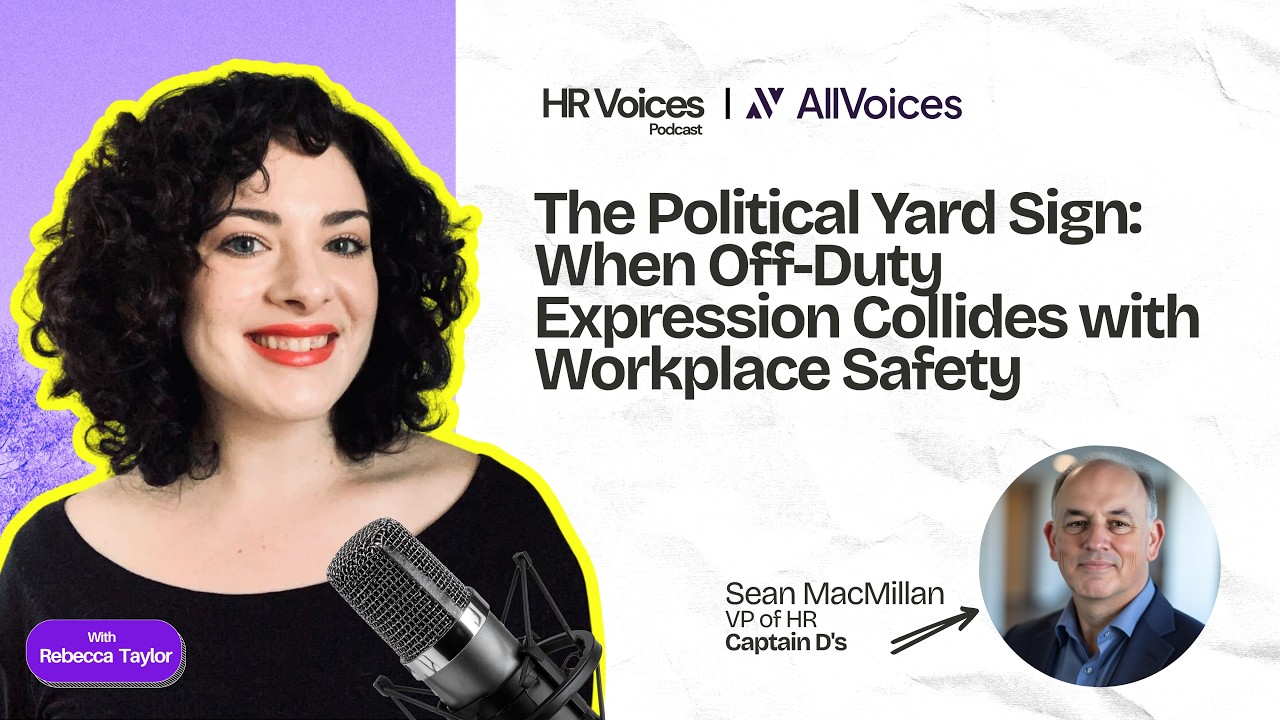
An employee posts a political yard sign on his personal Instagram. Coworkers file complaints saying they feel unsafe. State law protects his off-duty political expression, and he broke no policy — so what does HR actually do? Rebecca Taylor works the scenario with Sean MacMillan, VP of Human Resources at Captain D's: why the first conversation is with the people who complained, how to run an intent-versus-impact conversation without punishing lawful behaviour, and why this decision sets precedent.
About The Guest
Sean MacMillan is Vice President of Human Resources at Captain D's, the quick-service seafood chain, where he leads HR across roughly 300 company-owned and 200 franchised restaurants and about 5,000 employees. He came into the people function sideways, spending years in retail running single locations and then multi-unit operations before moving into HR in 2012, and holds a Master of Jurisprudence in Labor and Employment Law from Tulane University. He is certified SPHR and SHRM-SCP.
Episode Breakdown

An employee posts a photo of a political yard sign in front of his home on his personal Instagram. Several coworkers complain that they feel unsafe working with him. A state statute prohibits employer retaliation for lawful off-duty political activity, and he broke no policy. Sean MacMillan, VP of Human Resources at Captain D’s, the quick-service seafood chain, talked it through with host Rebecca Taylor for HR Voices.

Sean’s read was that the law is the clear part of the case. The unclear part is organizational: how HR shows up for the employees who raised the concern, what standard the company sets, and what the employee who posted should learn about impact. Nothing is technically wrong, and the team is divided anyway.

Why a Lawful Post Still Lands on HR

Sean did not see the complaints as a duty-of-care safety issue. Dismissing them is still wrong. They come from people who, as Sean put it, “have to find a way to work together after this.”

Sean said the subject shows up at least every four years, and in between. SHRM’s Civility Index for late summer 2024 found 47 percent of workers naming political viewpoint differences as a contributor to workplace incivility. Politics in the workplace is a standing ER issue, not an election-year surprise.

Sean also saw a leadership lesson for the employee who posted. “You can do whatever you want in your personal time,” he said, but a post coworkers can see carries into work. The account is the employee’s and the problem is HR’s, the bind where personal social media meets ER.

How IRAC Separates the Rules From Everything Else

For the black-and-white pieces of an investigation, Sean uses IRAC: issue, rule, application, conclusion. It is a legal premise he learned in school, though he is quick to say he is not an attorney.

Here the rule has two layers, the statute and the company’s own rules for employee social media. The analysis changes, Sean said, if the employee is wearing a company shirt next to the sign. Statutes can turn on details like that. New York’s labor law, for one, protects legal political activities outside working hours, off the employer’s premises, and without its equipment.

Coworkers who post a rebuttal land in what Sean called “social media policy land,” where most policies hold online conduct toward colleagues to the same standard as conduct in the restaurant. IRAC settles the rules. It does not settle the people, and Sean said it is “always the other stuff” that makes a case hard.

What Actually Works

Start With the People Who Complained

Sean hears the complainants first, one at a time, before he talks to the employee who posted. He expects one to three people to have raised the concern on behalf of a larger group. He asks why, why this incident, and whether there is history. The answers shape his later conversation with the poster.

He asks what unsafe means to them and clarifies the concern before acting. One example tends to lead to another person, so he decides how deep to go and which accounts are credible. “It takes a lot to call somebody,” Sean said. “The feeling heard matters a lot here.”

Ask What They Want, Then Answer Straight

Sean asks every complainant what they want to see happen. If the answer is a firing, he wants to hear it in the first conversation, before an unmet expectation becomes a lingering second issue. He promises to be “perfectly straight” and asks for the same back. When something is internal, he says so, since “we owe people that transparency.”

Reciting policy is not the job. Employees can look a policy up. Sean starts as one of two people at the same company working a problem, aiming to be “solution-based rather than side-based.” When HR has no good answer to what someone wants, he goes back to ask why, and may send a guideline or update the HR policy library.

Hold the Impact Conversation on the Record

With the employee who posted, Sean runs an intent versus impact conversation. He grants that harm was likely not the intent and that showing support is the employee’s right, notes that no policy was violated, and names the impact on a team where not everyone agrees.

Rebecca pointed out that the discomfort runs both ways, since the poster may now feel unsafe too. The conversation stays developmental, and it still cannot stay informal. Sean called it a sidebar that cannot be a sidebar, because an investigation is open and every step gets documented. The remedy may be as simple as coworkers choosing to “unfollow the person.” He closes by agreeing with the employee on what happens if the disruption continues.

Where Employee Relations Fits

The first political expression case sets the standard for the next one, Rebecca noted, so she argued for slowing down. Sean agreed. For the employee relations team, a decision only works as precedent if the next investigator can find it and see why it was made.

Teams that log outcomes in software that surfaces policy precedent start the next case from a record rather than from memory. Sean admits the record may not look like an answer. People do not work in boxes or agree on the same things, and sometimes there is no “checkbox answer,” only a decision about how to apply the rule going forward.

He would also speak to the whole company. No organization can bury its head in the sand and pretend it is not an election year, Sean said. A note that names the heated climate and restates the guidelines is how he would get ahead of election-season incivility.

Frequently Asked Questions About Off-Duty Political Speech at Work

Can HR Discipline an Employee for a Lawful Off-Duty Political Post?

It depends on the state and the policy. In the episode’s scenario, a statute barred retaliation for lawful off-duty political activity and no policy was broken, so HR addressed the impact through conversation, not discipline.

Who Should HR Talk to First When Coworkers Say a Post Makes Them Feel Unsafe?

The coworkers who raised the concern, one at a time. Sean hears them before the employee who posted, to learn what unsafe means, whether there is history, and which accounts are credible.

What Is an Intent Versus Impact Conversation?

It is a conversation that separates what an employee meant from what the action caused. HR acknowledges the likely intent, names the effect on coworkers, and agrees on a way forward without treating it as misconduct.

How Does IRAC Work in an HR Investigation?

It puts the rules-based part of a case in order: issue, rule, application, conclusion. HR names the issue, finds the governing law or policy, applies it to the facts, and concludes.

Why Does the First Political Expression Case Set Precedent?

Because how HR applies the policy the first time becomes the standard for similar cases. Rebecca and Sean both favor slowing down and reaching a decision the company is willing to apply again.

The Bottom Line for HR Leaders

Sean MacMillan’s framing is that culture “is shaped by the decisions that you make and how you show up when things like this happen.” A lawful post that divides a team is a hard test of it, since no violation settles the matter.

The assumption he wants retired is that HR exists “solely for the purpose of protecting the organization.” The unseen conversations where HR protects people would change that view, Sean said. HR answers to laws that protect employees too, and the employee experience is “half our job if not more.” Cases like this one are where the misconceptions that erode trust in HR get answered.

See how AllVoices helps HR teams handle divisive concerns consistently, from the first conversation to a documented decision.
Our next webinar
Frequently asked questions

Got more questions? Email us at support@allvoices.co and we'll respond ASAP.

No items found.
Frequently asked questions

Got more questions? Email us at support@allvoices.co and we'll respond ASAP.

No items found.

When Off-Duty Political Speech Divides Your Workplace

About the guest

Sean MacMillan is Vice President of Human Resources at Captain D's, the quick-service seafood chain, where he leads HR across roughly 300 company-owned and 200 franchised restaurants and about 5,000 employees. He came into the people function sideways, spending years in retail running single locations and then multi-unit operations before moving into HR in 2012, and holds a Master of Jurisprudence in Labor and Employment Law from Tulane University. He is certified SPHR and SHRM-SCP.

Episode Breakdown

An employee posts a photo of a political yard sign in front of his home on his personal Instagram. Several coworkers complain that they feel unsafe working with him. A state statute prohibits employer retaliation for lawful off-duty political activity, and he broke no policy. Sean MacMillan, VP of Human Resources at Captain D’s, the quick-service seafood chain, talked it through with host Rebecca Taylor for HR Voices.

Sean’s read was that the law is the clear part of the case. The unclear part is organizational: how HR shows up for the employees who raised the concern, what standard the company sets, and what the employee who posted should learn about impact. Nothing is technically wrong, and the team is divided anyway.

Why a Lawful Post Still Lands on HR

Sean did not see the complaints as a duty-of-care safety issue. Dismissing them is still wrong. They come from people who, as Sean put it, “have to find a way to work together after this.”

Sean said the subject shows up at least every four years, and in between. SHRM’s Civility Index for late summer 2024 found 47 percent of workers naming political viewpoint differences as a contributor to workplace incivility. Politics in the workplace is a standing ER issue, not an election-year surprise.

Sean also saw a leadership lesson for the employee who posted. “You can do whatever you want in your personal time,” he said, but a post coworkers can see carries into work. The account is the employee’s and the problem is HR’s, the bind where personal social media meets ER.

How IRAC Separates the Rules From Everything Else

For the black-and-white pieces of an investigation, Sean uses IRAC: issue, rule, application, conclusion. It is a legal premise he learned in school, though he is quick to say he is not an attorney.

Here the rule has two layers, the statute and the company’s own rules for employee social media. The analysis changes, Sean said, if the employee is wearing a company shirt next to the sign. Statutes can turn on details like that. New York’s labor law, for one, protects legal political activities outside working hours, off the employer’s premises, and without its equipment.

Coworkers who post a rebuttal land in what Sean called “social media policy land,” where most policies hold online conduct toward colleagues to the same standard as conduct in the restaurant. IRAC settles the rules. It does not settle the people, and Sean said it is “always the other stuff” that makes a case hard.

What Actually Works

Start With the People Who Complained

Sean hears the complainants first, one at a time, before he talks to the employee who posted. He expects one to three people to have raised the concern on behalf of a larger group. He asks why, why this incident, and whether there is history. The answers shape his later conversation with the poster.

He asks what unsafe means to them and clarifies the concern before acting. One example tends to lead to another person, so he decides how deep to go and which accounts are credible. “It takes a lot to call somebody,” Sean said. “The feeling heard matters a lot here.”

Ask What They Want, Then Answer Straight

Sean asks every complainant what they want to see happen. If the answer is a firing, he wants to hear it in the first conversation, before an unmet expectation becomes a lingering second issue. He promises to be “perfectly straight” and asks for the same back. When something is internal, he says so, since “we owe people that transparency.”

Reciting policy is not the job. Employees can look a policy up. Sean starts as one of two people at the same company working a problem, aiming to be “solution-based rather than side-based.” When HR has no good answer to what someone wants, he goes back to ask why, and may send a guideline or update the HR policy library.

Hold the Impact Conversation on the Record

With the employee who posted, Sean runs an intent versus impact conversation. He grants that harm was likely not the intent and that showing support is the employee’s right, notes that no policy was violated, and names the impact on a team where not everyone agrees.

Rebecca pointed out that the discomfort runs both ways, since the poster may now feel unsafe too. The conversation stays developmental, and it still cannot stay informal. Sean called it a sidebar that cannot be a sidebar, because an investigation is open and every step gets documented. The remedy may be as simple as coworkers choosing to “unfollow the person.” He closes by agreeing with the employee on what happens if the disruption continues.

Where Employee Relations Fits

The first political expression case sets the standard for the next one, Rebecca noted, so she argued for slowing down. Sean agreed. For the employee relations team, a decision only works as precedent if the next investigator can find it and see why it was made.

Teams that log outcomes in software that surfaces policy precedent start the next case from a record rather than from memory. Sean admits the record may not look like an answer. People do not work in boxes or agree on the same things, and sometimes there is no “checkbox answer,” only a decision about how to apply the rule going forward.

He would also speak to the whole company. No organization can bury its head in the sand and pretend it is not an election year, Sean said. A note that names the heated climate and restates the guidelines is how he would get ahead of election-season incivility.

Frequently Asked Questions About Off-Duty Political Speech at Work

Can HR Discipline an Employee for a Lawful Off-Duty Political Post?

It depends on the state and the policy. In the episode’s scenario, a statute barred retaliation for lawful off-duty political activity and no policy was broken, so HR addressed the impact through conversation, not discipline.

Who Should HR Talk to First When Coworkers Say a Post Makes Them Feel Unsafe?

The coworkers who raised the concern, one at a time. Sean hears them before the employee who posted, to learn what unsafe means, whether there is history, and which accounts are credible.

What Is an Intent Versus Impact Conversation?

It is a conversation that separates what an employee meant from what the action caused. HR acknowledges the likely intent, names the effect on coworkers, and agrees on a way forward without treating it as misconduct.

How Does IRAC Work in an HR Investigation?

It puts the rules-based part of a case in order: issue, rule, application, conclusion. HR names the issue, finds the governing law or policy, applies it to the facts, and concludes.

Why Does the First Political Expression Case Set Precedent?

Because how HR applies the policy the first time becomes the standard for similar cases. Rebecca and Sean both favor slowing down and reaching a decision the company is willing to apply again.

The Bottom Line for HR Leaders

Sean MacMillan’s framing is that culture “is shaped by the decisions that you make and how you show up when things like this happen.” A lawful post that divides a team is a hard test of it, since no violation settles the matter.

The assumption he wants retired is that HR exists “solely for the purpose of protecting the organization.” The unseen conversations where HR protects people would change that view, Sean said. HR answers to laws that protect employees too, and the employee experience is “half our job if not more.” Cases like this one are where the misconceptions that erode trust in HR get answered.

See how AllVoices helps HR teams handle divisive concerns consistently, from the first conversation to a documented decision.